
– Story by Cornel Engelbrecht
After I got a call from Kevin asking me to share my journey to entering Gravel Burn, I realised this was never simply a story about cycling.
It was about endurance.
About pain.
About surviving fear.
About learning how to keep moving forward when life asks more from you than you ever believed you could give.
This is a story about the bond between a mother and her daughter.
A story about fear, love, suffering, endurance and survival.
And about how my bike became woven into every part of that journey.
My journey began the day my 20-year-old daughter was diagnosed with brain cancer.
For the last two years, my daughter and I lived side by side through the reality of this disease. Our lives became inseparable from hospitals, scans, treatments, sleepless nights, uncertainty and the quiet understanding that every moment together mattered.
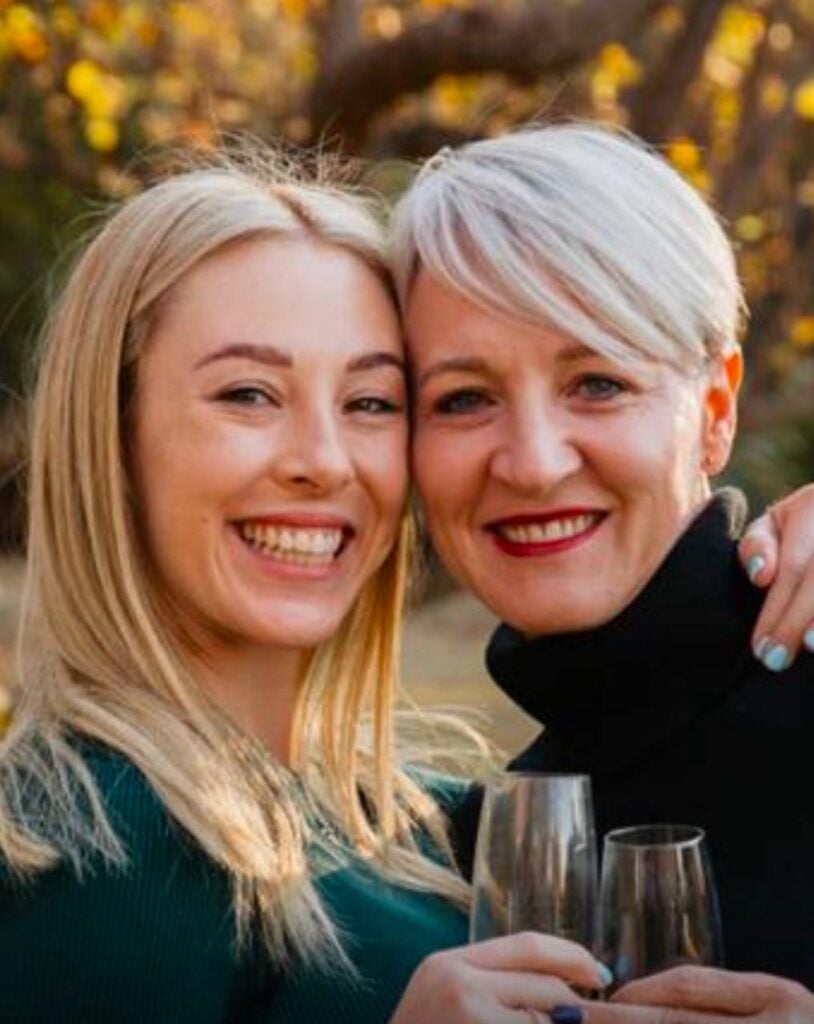
Fear nearly strangled me. It sat on my chest every morning and followed me into every night. The uncertainty was unbearable. Watching your child suffer is something no parent can prepare for. There is no training for helplessness. No manual for watching someone you love slowly disappear while you stand there unable to stop it, knowing you cannot carry the pain for them.
During that time, my bike became far more than training.
It became the place where I carried what I could not say out loud.
The place where I could breathe when fear became overwhelming.
The place where I could suffer physically because emotionally I felt powerless.
When I first got onto my bike, it was with one mission only: to suffer.
My bike became confrontational.
A place to empty myself completely.
I wanted my legs to hurt more than my heart.
I wanted exhaustion louder than my thoughts.
I wanted to push myself physically because the emotional pain felt unbearable and shapeless.
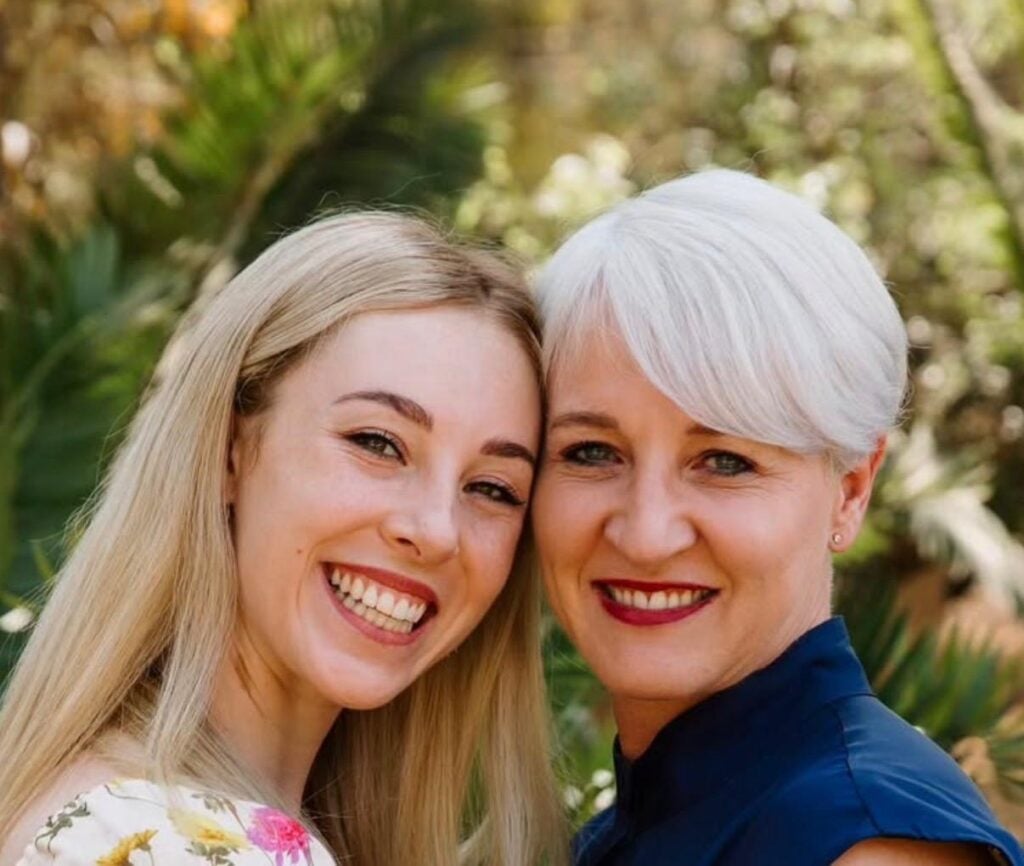
During the last few months beside my daughter, I cared for her day and night. Outside rides became limited because I could never be far away from her. So when she slept, I climbed onto my trainer and rode in silence.
Then I came back to her. Again and again.
My bike became part of our vigil and existed inside my love for her.
But somewhere along the road, something changed. The suffering slowly transformed into strength and became survival.
Cycling gave me structure when life had become chaos. It gave me something simple when everything else was impossibly complicated. I did not need to think. I only needed to pedal. One more kilometre. One more climb. One more session.
Cycling became stabilising because it created a contained world inside chaos. It gave my mind and body something profoundly important during a period of prolonged fear, caregiving and uncertainty.
It became the only place where my mind could breathe. Those rides were not about performance. They were about survival.
It gave my pain somewhere to go physically. Riding transformed some of that emotional weight into movement. The pain on my bike became finite, measurable, survivable. My emotional suffering felt endless.
Cycling gave me hardship. My brain knew how to navigate.
The program I got from my trainer told me exactly what to do.
Warm up.
Hit the interval.
Hold the watts.
Survive the set.
Recover.
Finish.
That structure became incredibly important when the rest of life felt devastatingly uncertain. My training plan removed the burden of choice. I only had to clip in and start pedalling.
And every completed ride quietly taught me something important:
I can still continue.
Not because cycling fixed grief. It didn’t.
But because my bike gave the suffering somewhere to exist without destroying me.
And somehow;
in the middle of all her suffering, my daughter still worried about me.
She worried about how I would continue one day without her.
Even near the end, she was trying to protect me.
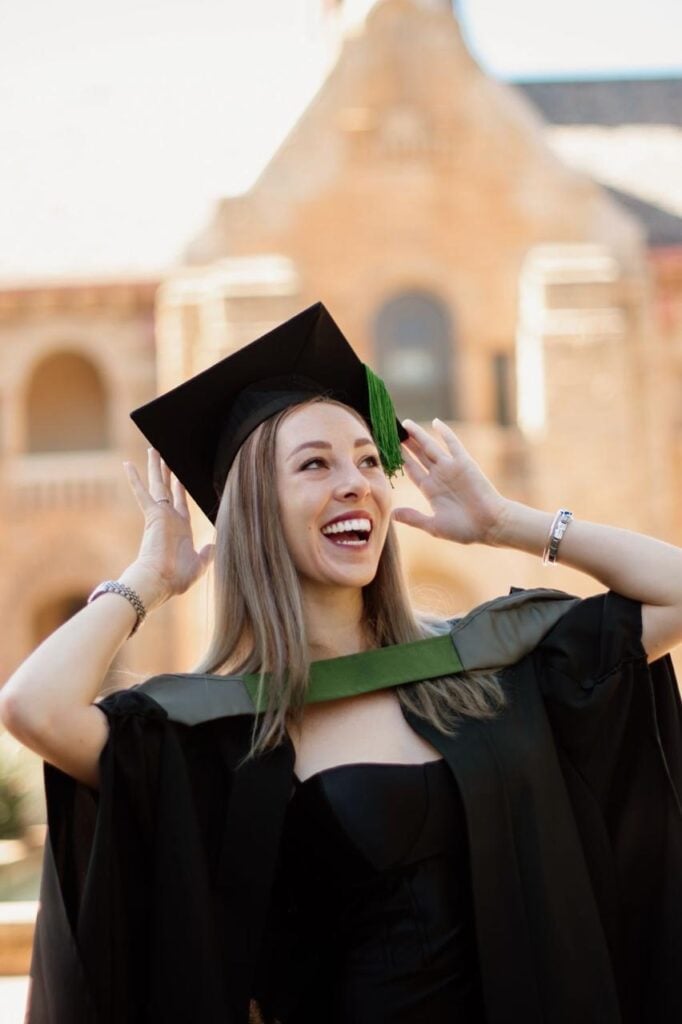
When I told her entries for Gravel Burn had opened, she encouraged me to enter. She told me this was exactly what I was going to need.
She told me I had to stay on my bike. To keep pedalling.
It was as if she already understood that cycling would become the thread connecting me back to life after she was gone.
She taught me something about life, the past 2 years, because of how she chose to live her life after her diagnosis.
Nicola began her studies at the University of Pretoria in 2022. She studied BSc Applied Mathematics which included both mathematical and biology sciences. At the end of her second year, she was diagnosed with brain cancer and had major brain surgery. Two weeks later she returned to write her final exams. During her third and final year she received gene suppressor chemotherapy treatment.
At the end of 2024 she completed her degree with the same determination and resilience that defined every part of her life. In January, 2025, her follow-up exams showed progression of disease. She began with radiation therapy and completed her honors degree in Bioinformatics with distinction at the end of the year.
The day after her last exam, her follow-up exams showed grade 4 end-stage disease and doctors gave her 1-3 months left to live.
Despite everything she was facing, she never complained.
She faced challenges that could have broken her spirit, but she made a different choice. She chose strength, when life was hard. She chose positivity, when there were reasons to despair. She chose to work hard. She chose to live life fully, with courage and purpose.
Her life reminds me that happiness is not something you wait for one day to arrive.
It is something you choose, even in difficult moments.
If my daughter could leave one message behind, I believe it would be
that life is precious – don’t wait to truly live it.
Nicola passed away on 5 May 2026, in my arms at home surrounded with the love of her family. She was never alone. I had the privilege to care for her, from her first to her last breath.
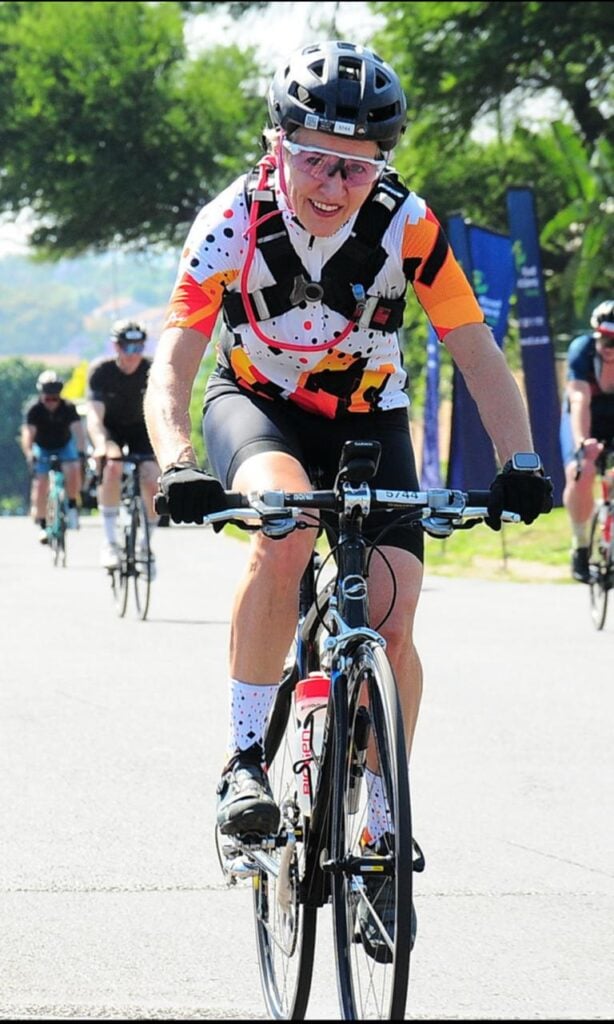
A few days after her death, I got back onto my bike.
But this time was different.
The first time I started riding after her passing felt completely different from when this journey first began. In the beginning, I rode carrying fear, anxiety, shock and anticipatory grief.
Now I climbed onto the bike carrying devastation. I was no longer the same person.
It felt as though I had to learn how to live all over again.
I was broken. Completely lost. Grief took the air out of my lungs. I had to teach my lungs new ways to breathe around her absence.
I had not only lost my daughter – I had lost my best friend, my soulmate, the person who filled every space of my life.
There are moments on the bike where the grief still arrives without warning. Sometimes it hits in silence. Sometimes during an interval. Sometimes on a lonely road where there is nowhere to hide from memory.
But the bike still teaches me the same lesson over and over again:
Keep pedalling.
Not because the pain disappears.
Not because grief becomes lighter.
But because movement itself becomes hope.
There are moments during hard intervals or long lonely rides where my mind reaches for her in the exact place where I taught myself how to survive. When I rode, I still felt her there with me. Sometimes I can almost see her behind me, laughing, encouraging me, full of life and movement.
“Go mommy, go.”
Not stop.
Not give up.
Go.
That matters to me.
And that is why this story fits so deeply with Gravel Burn.
This race is not only about distance. It is about confronting yourself. About continuing through discomfort, uncertainty, fear and exhaustion when every part of you wants to stop.
That has been my life.
Every climb mirrors the emotional terrain I have already travelled.
People often think endurance is about strength. I no longer believe that. Endurance is about vulnerability. About continuing despite fear. Continuing despite pain. Continuing despite heartbreak.
At the start line of Gravel Burn, I know I will again feel uncertainty. I know I will carry fear – fear of not being strong enough, fear of not finishing, fear of what grief may still demand from me along the way.
But I also know something else now.
On my bike, fear and pain will end.
Even the longest road eventually reaches a finish line.
When I ride this race, I will not ride alone.
I will ride for her.
I imagine her ahead of me, saving a seat for me. And when my journey here is finished and I finally lay down my head, I believe I’ll recognize her.
Until then.
I will carry her forward as proof that love outlives goodbye.
This is the legacy my daughter chose to leave behind.
Not sadness, but inspiration.
May her legacy continue and inspire many others along my route forward.
Gravel Burn is for you, Nicola.